Security
52 Security terms explained simply, ordered from basic to advanced. Start at the top if the topic is new to you.
Basic

Antivirus
A program that watches your files and apps and blocks the ones known to be harmful.
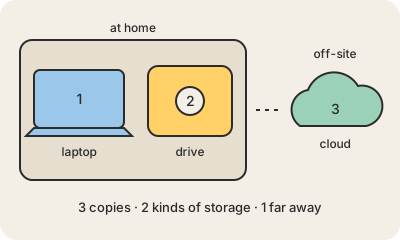
Backup
A separate copy of your data, kept so you can get it back when the original is lost.

Biometrics
Proving who you are with your body: a fingerprint, your face, your voice.

Blockchain
A shared record book, copied on many computers, where old pages can't be quietly changed.
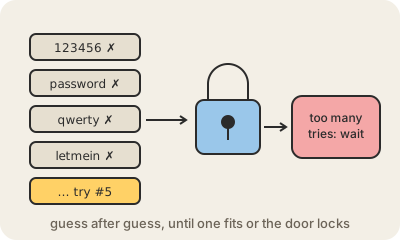
Brute-force attack
Breaking into an account by trying passwords, one after another, until one works.
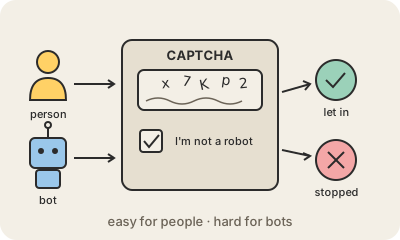
CAPTCHA
A small test a website uses to tell a person from an automated program.
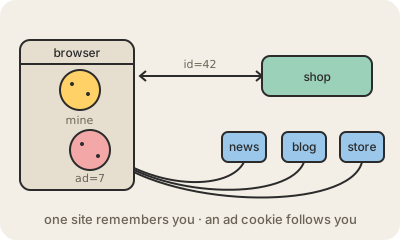
Cookies
Small notes a website asks your browser to keep, so it can recognize you later.
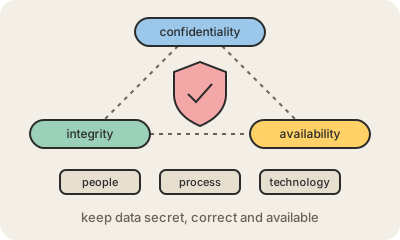
Cybersecurity
Protecting computers, networks and data from theft, damage and disruption.
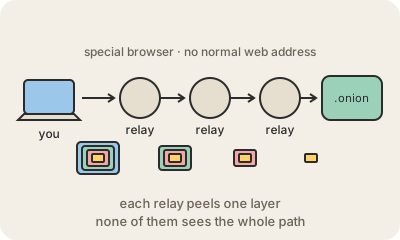
Dark web
Websites that are reachable only with special software that hides who is talking to whom.
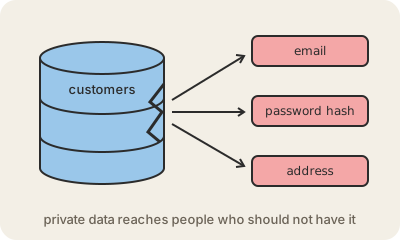
Data breach
When private data an organization holds ends up with people who should not have it.
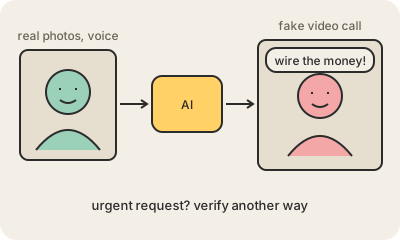
Deepfake
A fake video, photo or voice made with AI to look and sound like a real person.
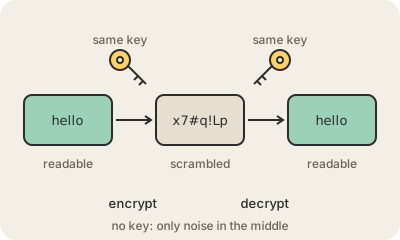
Encryption
Scrambling data so that only someone with the key can read it.
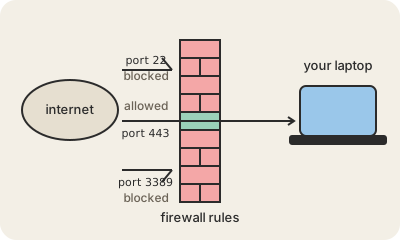
Firewall
A gatekeeper that decides which network traffic gets in or out.
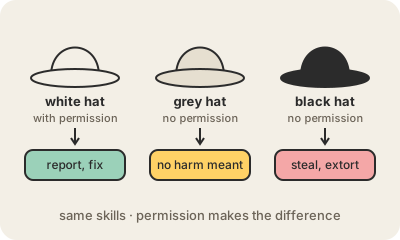
Hacker
Someone who takes systems apart to see how they work, for better or for worse.
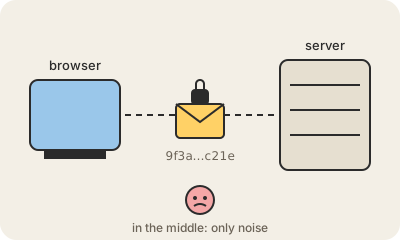
HTTPS
The padlock in your browser: web traffic nobody in between can read.
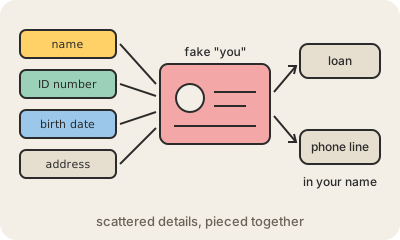
Identity theft
Someone uses your personal details to pass as you, usually to borrow or buy in your name.
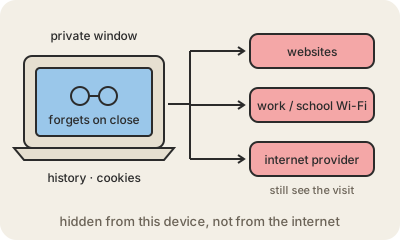
Incognito mode
A browser window that forgets your visit on this device. It does not make you invisible.
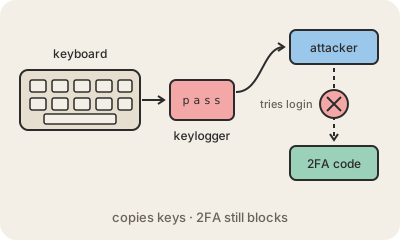
Keylogger
Software or a gadget that secretly records everything you type.
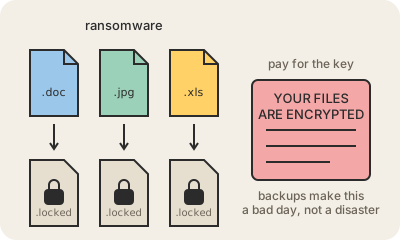
Malware and ransomware
Software built to harm you; ransomware locks your files and charges to unlock them.
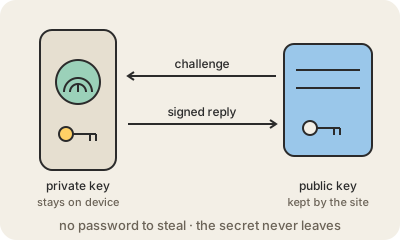
Passkeys
A way to sign in without a password, using your phone's or computer's lock instead.
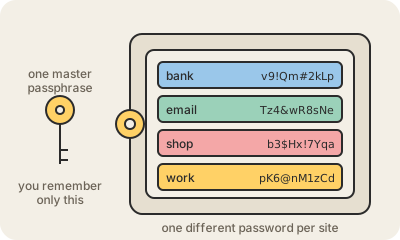
Password manager
An encrypted vault that remembers a different strong password for every site.
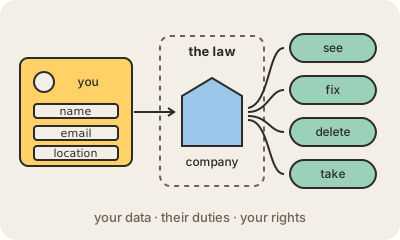
Personal data and GDPR
Information about you, and the laws that say who can use it and how.
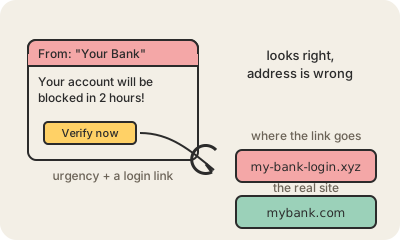
Phishing
A fake message that tricks you into handing over a password or a payment.
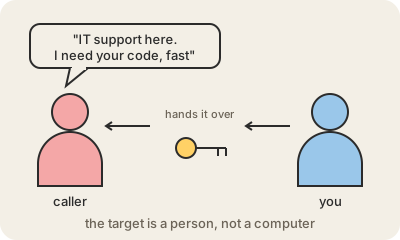
Social engineering
Manipulating people, instead of machines, into giving away access or information.
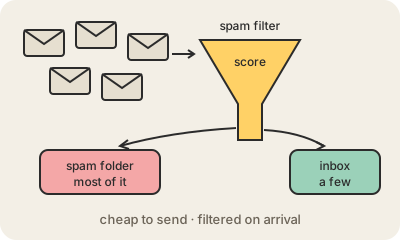
Spam
Unwanted messages sent in bulk: ads, scams and junk you never asked for.
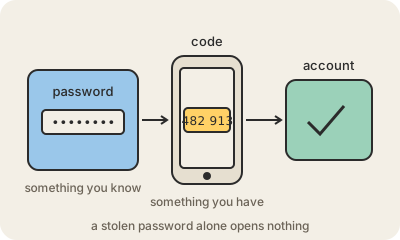
Two-factor authentication
A second proof that you are you, so a stolen password alone is not enough.
Intermediate
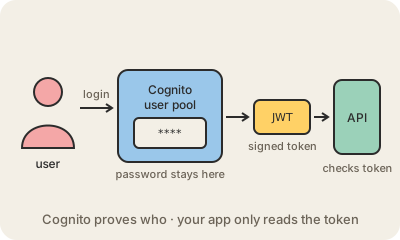
Amazon Cognito
Sign-up, login and passwords for your app, handled by AWS instead of you.
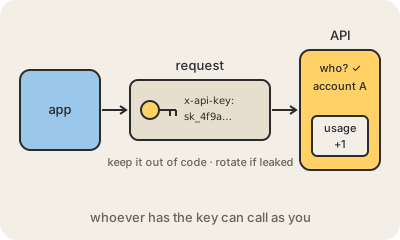
API key
A secret string that identifies your app when it calls someone else's API.
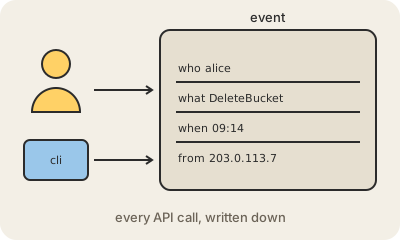
AWS CloudTrail
The logbook of an AWS account: who did what, when, and from where.
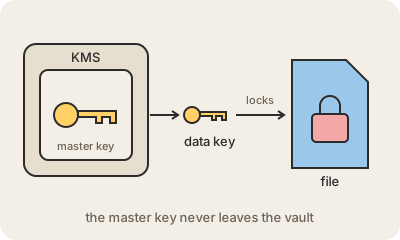
AWS KMS
AWS's vault for encryption keys: you use them, but they never leave.
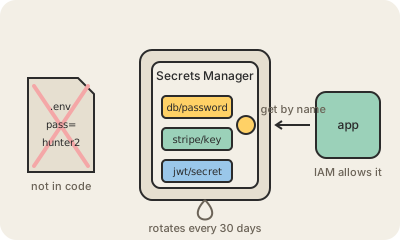
AWS Secrets Manager
A locked vault for passwords and API keys, so they never live in your code.
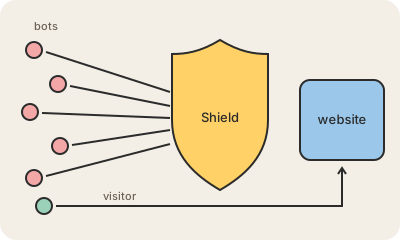
AWS Shield
AWS's protection against DDoS attacks, on by default for everyone.
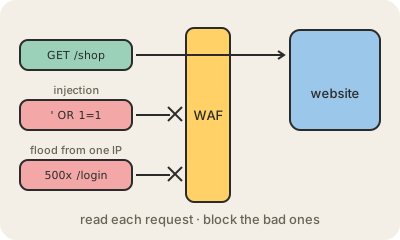
AWS WAF
A filter in front of your website that reads each request and blocks the bad ones.
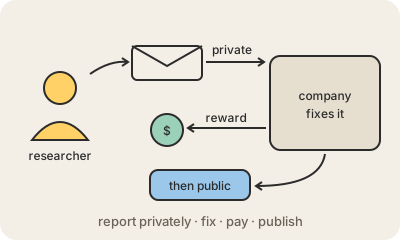
Bug bounty
A company pays outside researchers who find and privately report its security holes.
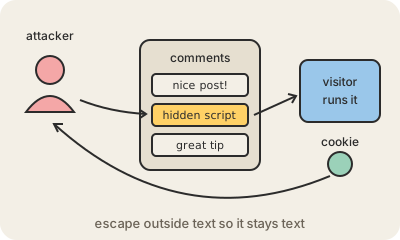
Cross-site scripting
Sneaking code into a website so it runs in other visitors' browsers.
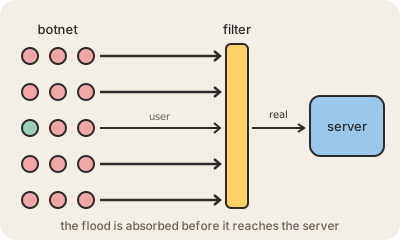
DDoS
Knocking a site offline by flooding it with more traffic than it can handle.
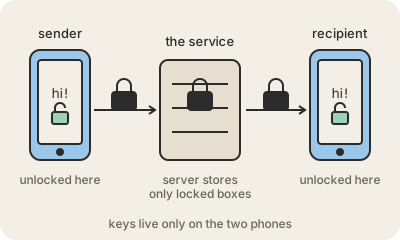
End-to-end encryption
Only the sender and the recipient can read a message; the service in between cannot.
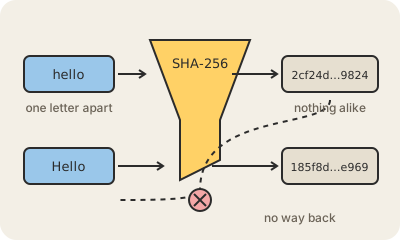
Hashing
A one-way fingerprint of data: easy to compute, not meant to be reversed.
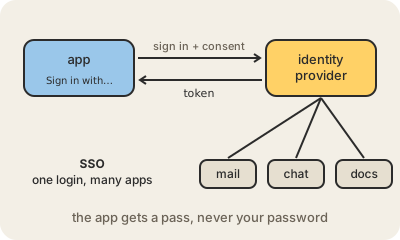
OAuth and SSO
Log in once with an account you trust, and let it vouch for you in other apps.
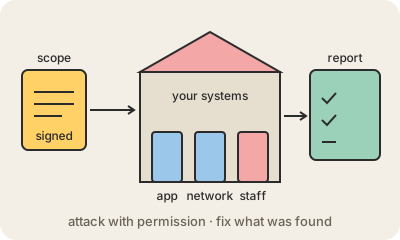
Penetration testing
Hiring someone to break into your systems, with permission, before a criminal does.
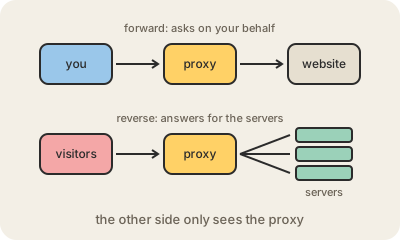
Proxy
A middleman computer that makes requests on someone else's behalf.
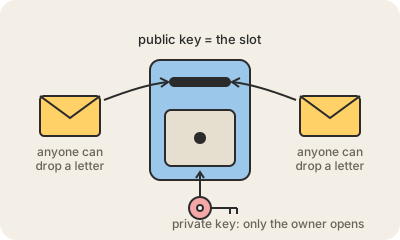
Public-key cryptography
Two linked keys: one you share with everyone to lock, one you keep to unlock.
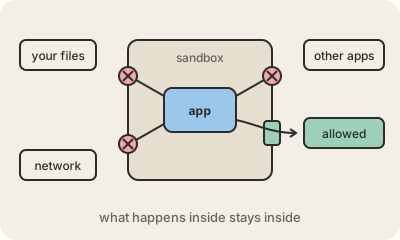
Sandboxing
Running a program in a closed box so it cannot harm anything outside it.
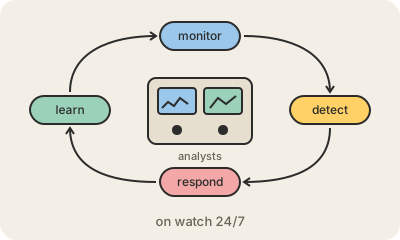
Security operations center
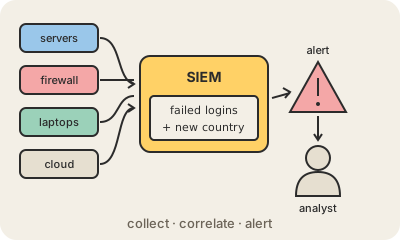
The team that watches an organization's systems around the clock for attacks.
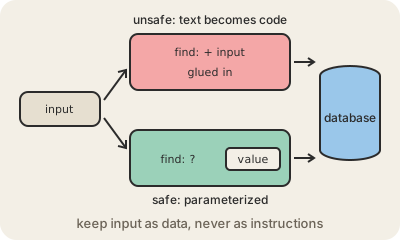
SQL injection
Typing text into a form that the database mistakes for its own instructions.
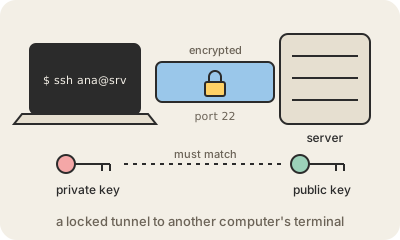
SSH
An encrypted way to log in to another computer and type commands on it.
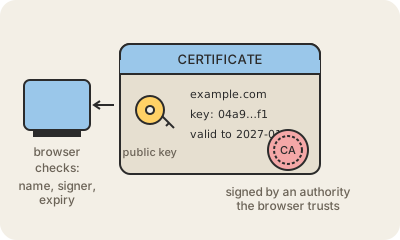
TLS certificate
The ID card a website shows your browser to prove it is who it claims to be.
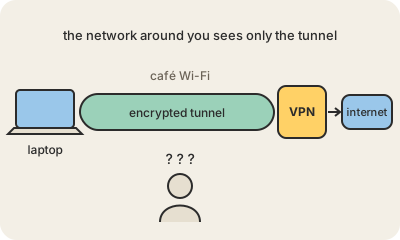
VPN
An encrypted tunnel that sends all your traffic through another network first.
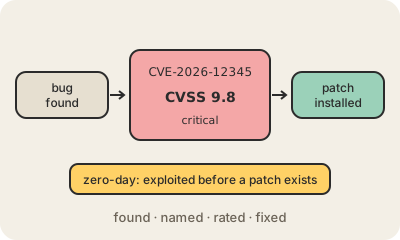
Vulnerability and CVE
A flaw that lets an attacker misuse software, and the public id that names it.
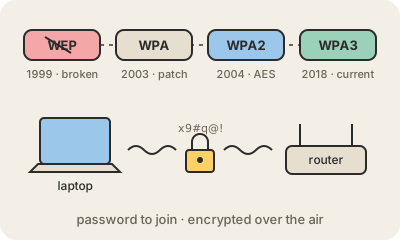
Wi-Fi security
How a Wi-Fi password keeps neighbors out and scrambles what travels through the air.