Keylogger
Software or a gadget that secretly records everything you type.
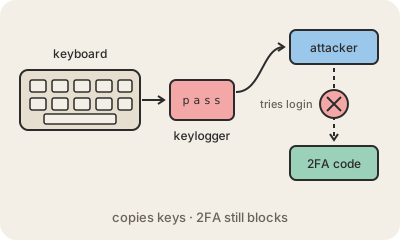
A keylogger records every key you press and sends the log to someone else. Passwords, card numbers, private messages, searches: if you type it, it ends up in the list. Most keyloggers are a kind of malware (often grouped under spyware) that sneaks onto a computer or phone through a phishing attachment, a pirated program or a fake app. A few are physical: a small plug between the keyboard and the computer, or a skimmer stuck on an ATM keypad.
Not all of them are criminal. Some parental-control and employee-monitoring products record keystrokes openly, and the law in many countries limits when that is allowed. What makes a keylogger an attack is that it runs without the person's knowledge, to steal what they type.
Protection is mostly good habits. Keep the operating system and the browser updated, install apps only from official stores, and be suspicious of attachments. A password manager helps because it fills passwords in without you typing them. And two-factor authentication is the real safety net: even if a keylogger captures your password, the attacker still needs the code on your phone or your security key. On shared or public computers, avoid logging into anything important.
Keep in mind
- Records keystrokes and sends them to whoever installed it.
- Usually arrives as malware; some are small devices plugged into the keyboard.
- A password manager reduces how much you type; 2FA makes stolen passwords far less useful.
- Be careful logging into important accounts on shared or public computers.


