Hacker
Someone who takes systems apart to see how they work, for better or for worse.
The word hacker has two lives. It was born in the late 1950s and 1960s among students at MIT, where a "hack" was a clever, playful solution to a technical problem. In that original sense, a hacker is a curious tinkerer who loves understanding how things work and bending them to do new things. Much of today's free and open source software came out of that culture.
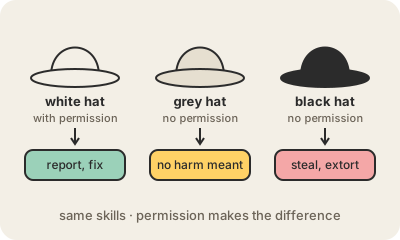
In the 1980s the press started using "hacker" for people who broke into computers, and that meaning stuck. Inside the field, people tell them apart by the color of the hat, borrowed from old westerns. A white hat or ethical hacker looks for weaknesses with permission and reports them so they get fixed. A black hat breaks in without permission, to steal, extort or cause damage. A grey hat is in between: no permission, but no harm intended, which is still often illegal.
White hats are a real profession. Companies hire penetration testers to attack their own systems before criminals do, and many run bug bounty programs that pay outsiders who report a vulnerability responsibly: privately, to the owner, giving time to fix it before telling anyone. So when you read "hacker", look at the context: it can be a compliment, a job title or an accusation.
Keep in mind
- Originally a hacker was a curious tinkerer; the meaning of "attacker" came later, through the press.
- White hats work with permission, black hats without it, grey hats in between.
- Penetration testing and bug bounties are legal, paid ways of hacking.
- Responsible disclosure means telling the owner privately and giving time to fix the flaw.


