Dark web
Websites that are reachable only with special software that hides who is talking to whom.
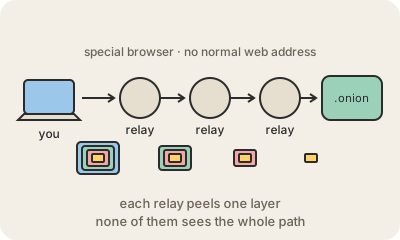
The dark web is a small part of the internet made of sites you cannot open with a normal browser or find on a search engine. They live on overlay networks, the best known being Tor, and have addresses ending in .onion. Visiting them requires software like the Tor Browser, which is designed so that neither the site nor anyone watching the network can easily tell who is visiting.
It helps to separate three layers. The surface web is everything a search engine can find. The deep web is everything behind a login or not indexed: your email inbox, your bank account, a company's intranet. It is by far the largest part, and it is perfectly ordinary. The dark web is a thin slice on top that is deliberately hidden and anonymous.
The anonymity comes from onion routing. Your traffic is wrapped in several layers of encryption and bounced through three volunteer-run relays around the world. Each relay removes one layer and only learns the previous and next stop, so no single point sees both who you are and where you are going. The idea came out of research at the US Naval Research Laboratory in the 1990s, and today the nonprofit Tor Project maintains the software.
People use it for very different things. Journalists receive tips from sources there, people in countries with censorship use it to read the open web, and several major news outlets run .onion versions of their sites. It also hosts illegal markets, forums where stolen data is sold, and many scams. Using Tor is legal in most countries, but the usual laws still apply to what you do with it. For most people, the dark web matters mainly as the place where leaked passwords end up, which is why changing them after a breach matters.
Keep in mind
- Sites reachable only through networks like Tor, with addresses ending in
.onion. - Not the same as the deep web, which is just everything behind a login.
- Onion routing passes traffic through three relays, each seeing only part of the path.
- Used both for privacy and free speech and for crime; using Tor itself is legal in most countries.


