Cybersecurity
Protecting computers, networks and data from theft, damage and disruption.
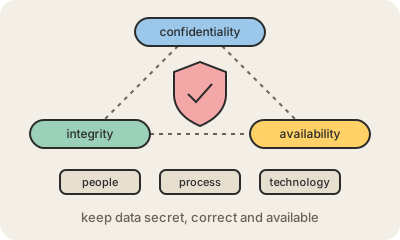
Cybersecurity is everything people and organizations do to keep their computers, networks and data safe from attack and misuse. It covers a lot of ground: passwords and two-factor authentication, encryption, firewalls, software updates, backups, training people to spot phishing, and the teams who watch for intruders.
A classic way to think about it is three goals. Confidentiality: only the right people can see the information (your medical record, a company's plans). Integrity: nobody can change it without permission (your bank balance, a hospital's dosage). Availability: it is there when needed (the online banking site, the hospital's systems during an emergency). Most attacks break at least one: a data leak breaks confidentiality, ransomware breaks availability, a forged transfer breaks integrity.
Security is not a product you install once. It is technology plus people plus habits, and attackers usually go for the weakest of the three, which is often a person tricked by a convincing message. That is why frameworks like the NIST Cybersecurity Framework organize the work as a cycle: understand what you have, protect it, detect problems, respond and recover. For an individual, a few habits cover most of the risk: updates on, a password manager, 2FA on important accounts and a backup.
Keep in mind
- The three classic goals: confidentiality, integrity and availability.
- It mixes technology, people and processes; attackers aim for the weakest link.
- Work runs as a cycle: identify, protect, detect, respond, recover.
- Updates, a password manager, 2FA and backups cover most personal risk.


