Data breach
When private data an organization holds ends up with people who should not have it.
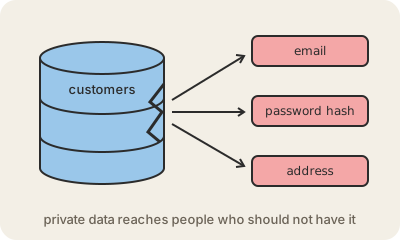
A data breach happens when information an organization is supposed to protect, such as customer emails, passwords, addresses, card numbers or medical records, is accessed or copied by someone without permission. It can be the work of attackers, but also of an employee who looks where they should not, or of a simple mistake that leaves a file open to the internet.
The causes repeat. Stolen or guessed passwords for an employee account, often thanks to phishing. A known vulnerability that was never patched. A database or cloud storage bucket configured as public by accident. A laptop lost without encryption. Many breaches are discovered weeks or months later, sometimes when the data shows up for sale.
For the people affected, the risk is what comes next. Leaked email and password pairs get tried on other sites, so reused passwords spread the damage. Personal details make phishing messages more convincing, and identity documents can be used for fraud. Many laws require companies to notify authorities and affected users; under Europe's GDPR, for example, the authority must usually be told within 72 hours.
When you get a breach notice, act on it calmly. Change the password for that service and anywhere you reused it, turn on two-factor authentication, and watch for messages that mention the breach, because scammers follow the news too. Services like Have I Been Pwned let you check whether your email appeared in known breaches.
Keep in mind
- Any unauthorized access to protected data counts, malicious or accidental.
- Common causes: stolen credentials, unpatched systems, public storage by mistake.
- Reused passwords turn one breach into many; use a different password per site.
- Laws often require the company to notify authorities and the people affected.


