Encryption
Scrambling data so that only someone with the key can read it.
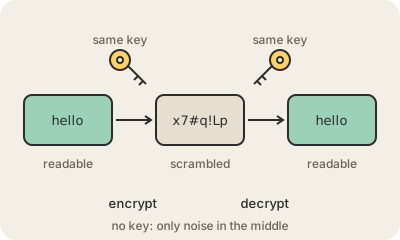
Encryption turns readable data (a message, a photo, a card number) into scrambled bytes that look like noise, using a key. Without the key the scrambled version is useless; with it, the original comes back exactly. The recipe for scrambling is called a cipher, and the good ones, like AES, are public and studied by everyone. The only secret is the key.
It exists for one situation: someone else can see your bytes and you do not want them to understand them. The storage in your phone is encrypted, so a thief who pulls out the chip gets gibberish. Your messages travel encrypted, so the owner of the café Wi-Fi sees traffic but not words. HTTPS is exactly this, applied to web pages.
There are two families. Symmetric encryption uses the same key to lock and unlock; it is fast, so it protects the bulk of the data. Public-key cryptography uses a pair of keys and solves a different problem: agreeing on a secret with someone you have never met. Real systems combine both. Encryption also hides content, not context: who you talk to, when, and how much is usually still visible.
Practical takeaway: turn on disk encryption on your laptop (FileVault on a Mac, BitLocker or Device encryption on Windows). Phones with a lock screen already have it. And when an app says end-to-end encryption, it means not even the company can read what you send.
Keep in mind
- The algorithm is public; the key is the only secret.
- Symmetric encryption uses one key; public-key encryption uses a pair.
- It hides what you send, not usually who you send it to.
- Turn on disk encryption on your laptop; most phones already have it.


