Wi-Fi
Networking over radio waves: the internet without the cable, within a few rooms.
Wi-Fi is a way of connecting devices to a local network using radio waves instead of cables. An access point (usually built into your router) broadcasts a network name, your phone picks it and, with the password, they start exchanging data over the air. Wi-Fi only covers the last few meters: from your device to the router. From the router onwards, the internet is mostly cables and fiber.
It is a family of standards called IEEE 802.11, which is why newer versions have friendlier names: Wi-Fi 5, Wi-Fi 6, Wi-Fi 7. Each one is faster and handles crowded rooms better. Two radio bands are common: 2.4 GHz reaches further and goes through walls better but is slower and crowded (microwaves and Bluetooth live there too), and 5 GHz (and now 6 GHz) is faster but shorter range.
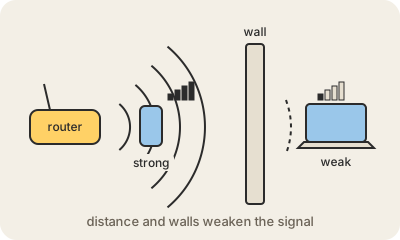
Because it is radio, anyone in range can hear it. That is why the password matters: with WPA2 or WPA3 the traffic between you and the router is encrypted. An open café network has no such protection, so what keeps your bank login private there is HTTPS, not the Wi-Fi. Slow Wi-Fi is also the most common reason a slow internet is not actually the internet: walls, distance and many neighbours sharing the same channel all cost speed.
Keep in mind
- Wi-Fi connects your device to the router over radio; the rest of the trip is cables.
- 2.4 GHz reaches further; 5 GHz and 6 GHz are faster but shorter range.
- WPA2/WPA3 encrypt the air link; on open networks only HTTPS protects you.
- Walls, distance and crowded channels are the usual cause of slow internet at home.