Bandwidth and latency
How much data fits per second, and how long each trip takes. Two different things.
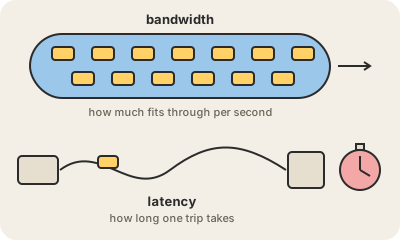
Bandwidth is how much data a connection can move per second, measured in megabits per second (Mbps) or gigabits (Gbps). Latency is how long a single piece of data takes to go from you to the other end and back, measured in milliseconds (ms) and often called ping. A connection can have lots of one and little of the other, and they feel very different.
Downloading a movie or streaming in 4K needs bandwidth: the pipe has to be wide. A video call, an online game or just clicking around a site needs low latency: each action waits for a round trip, and 200 ms of lag is noticeable even on a gigabit line. Latency is mostly physics and distance: light in a fiber takes roughly 100 ms to cross the Atlantic and come back, and every router on the way adds a bit more. That is why a CDN puts copies of content near you.
When the internet feels slow, ask which one it is. A page that takes a moment to start loading but then arrives all at once is a latency problem (far server, satellite link, overloaded Wi-Fi). A video that keeps buffering is a bandwidth problem (too many devices, a small plan, a weak Wi-Fi link). Internet plans advertise bandwidth; they almost never mention latency.
Keep in mind
- Bandwidth: Mbps, how much per second. Latency: ms, how long each trip takes.
- Streaming and downloads need bandwidth; calls, games and clicks need low latency.
- Distance sets a floor on latency; nothing beats the speed of light, so CDNs move content closer.
- More bandwidth does not fix lag.