BGP
The protocol networks use to tell each other which addresses they can reach.
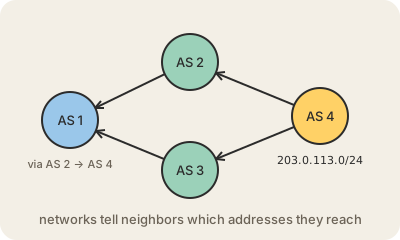
The internet is not one network but tens of thousands of independent ones: internet providers, universities, cloud companies, big websites. Each is an autonomous system (AS) with its own number. BGP, the Border Gateway Protocol, is how they tell each other which IP addresses they can deliver to. It is the reason a packet that leaves your home in Buenos Aires knows how to reach a server in Frankfurt.
The mechanism is a chain of announcements. A network says to its neighbors 'I am the home of these addresses'. Each neighbor passes the news on, adding itself to the path: 'you can reach them through me'. Every router at the edge ends up with several possible routes to each destination and picks one according to its own rules, often preferring shorter paths or cheaper business agreements. BGP is not about finding the fastest path; it is about policy, about who agrees to carry whose traffic.
BGP was designed when the networks on the internet largely trusted each other, and by default a router believes what its neighbors announce. That makes mistakes contagious. If a network wrongly announces addresses that are not its own, by accident or on purpose (a BGP hijack), traffic can be pulled toward it. In 2008 a provider in Pakistan meant to block YouTube locally and briefly took it offline for much of the world; in 2021 Facebook withdrew its own routes during maintenance and disappeared from the internet for hours.
The fixes are gradual. RPKI lets an address owner publish a signed statement of which networks may announce its addresses, so others can reject impostors, and providers increasingly filter what their customers are allowed to announce. For most people BGP is invisible, until it breaks and a huge site is suddenly unreachable.
Keep in mind
- Connects the tens of thousands of independent networks that make up the internet.
- Networks announce the addresses they reach; neighbors pass the routes along.
- Route choice follows business policy, not just distance or speed.
- Built on trust, so bad announcements spread; RPKI and filtering reduce the risk.