Packet
The small chunk every piece of internet data is cut into before it travels.
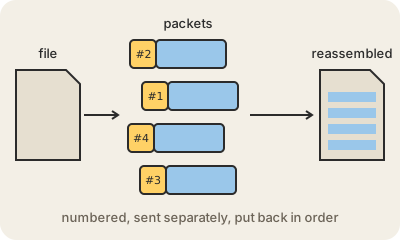
Nothing travels the internet in one piece. A photo, a web page, a second of a video call: everything is chopped into packets, small blocks of roughly 1,500 bytes at most, each sent on its own. A packet has a header (sender and destination IP address, ports, a sequence number, a few flags) and a payload, the actual slice of data. The receiving side puts the slices back in order.
Cutting data up is what makes the internet work at all. Packets from thousands of conversations share the same cables, interleaved; a router handles each one independently, reading only the header; if one gets lost or corrupted, only that small piece is resent. Two packets of the same file can even take different routes and still arrive, because each one carries the full destination address. This design, called packet switching, is the opposite of an old phone call, where a line was reserved end to end.
You meet packets when things go wrong. Packet loss is the share of packets that never arrive; a few percent is enough to make a video call stutter or a game lag, because TCP waits and resends. Tools like ping and traceroute send small test packets to measure latency and see which routers are on the way. Firewalls, VPNs and NAT all work by looking at, rewriting or wrapping packets.
Keep in mind
- A packet = header (addresses, ports, sequence number) + payload (the data).
- Packets from many conversations share the same cables; routers forward each one on its own.
- Packet loss, not low bandwidth, is what usually makes calls stutter.
pingandtracerouteare test packets that measure the path.