ISP
The company you pay to connect your home or phone to the internet.
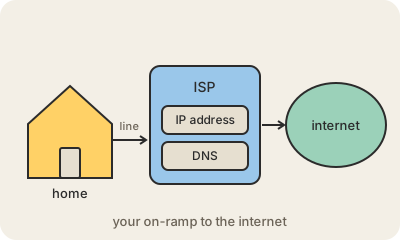
An ISP (internet service provider) is the company that connects you to the internet: the cable or phone company that brings a line to your home, a fiber provider, a mobile carrier or a satellite service. You pay it a monthly fee, and in exchange it links your home network, through your modem, to its own network, and from there to the rest of the internet.
Behind that simple service there is a lot of infrastructure. The ISP runs the cables or antennas in your area, gives your connection an IP address, often provides a DNS service that turns names like example.com into addresses, and connects its network to others, either at shared meeting points called internet exchange points or by paying larger carriers. Smaller ISPs buy their access from bigger ones, which connect with each other, and together they make up the internet.
Because all your traffic passes through it, your ISP can see a lot: which sites you connect to and when, even when the content itself is protected by HTTPS. What it may do with that information depends on the laws of each country. It also explains some everyday experiences: a slow connection at peak evening hours is often the ISP's network being busy, and an outage across your whole neighborhood is usually its problem, not your router's. A VPN or encrypted DNS hides part of your activity from the ISP, although the VPN provider then sees it instead.
Keep in mind
- The company that connects your home or phone to the internet.
- It can reach you by cable, phone line, fiber, mobile network or satellite.
- Assigns your IP address and often provides your DNS.
- Sees which sites you connect to, even when the content is encrypted.