Modem
The box that connects your home to your internet provider's network.
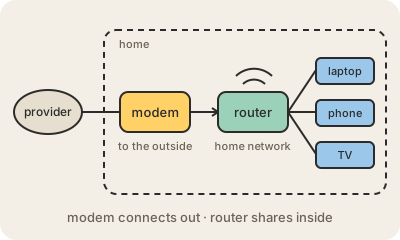
A modem is the device that connects your home to the network of your internet provider. The name comes from "modulator-demodulator": it turns digital data into a signal that can travel over the line coming into your home, and turns the incoming signal back into data. Which kind you have depends on that line: a DSL modem for a telephone line, a cable modem for TV cable, a box called an ONT for fiber optic, or a cellular modem for 4G or 5G.
The modem and the router do different jobs. The modem talks to the outside world over that one line. The router builds your home network: it gives each device a local address, runs the Wi-Fi and directs traffic between your devices and the modem. In many homes both live in a single box supplied by the provider, which is why people mix up the names, but inside they are still two separate functions.
Knowing the difference helps when something breaks. If no device in the house can reach the internet, the problem is often the modem or the provider's line, and the modem's lights usually show whether it has a signal. If one device works and another does not, or the Wi-Fi is weak in some rooms, the router or the Wi-Fi coverage is the more likely culprit. The classic fix, restarting the modem first and then the router, follows the order in which they set up the connection.
Keep in mind
- A modem connects your home to the provider's line: phone, cable, fiber or mobile.
- The router builds the home network and the Wi-Fi; the modem talks to the outside.
- Many providers supply one box that does both jobs.
- If nothing in the house connects, check the modem and the line first.