Fiber optic
Thin strands of glass that carry data as pulses of light, fast and over long distances.
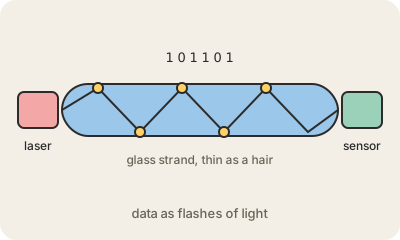
A fiber-optic cable carries data as light instead of electricity. Inside is a strand of very pure glass, about as thin as a human hair, that guides light along its length by reflecting it off its own walls. A laser at one end switches on and off extremely fast, and a sensor at the other end reads those flashes back as ones and zeros.
Light in glass has big advantages over electrical signals in copper. It loses very little strength with distance, so a signal can travel many kilometers before it needs a boost. Electrical interference from motors or storms does not disturb it. And one fiber can carry many separate signals at once, each on a different color of light. That is why the backbone of the internet, including the cables on the ocean floor that connect continents, is made of fiber.
At home, fiber to the home (FTTH) means the fiber reaches your building or your door, instead of stopping at a cabinet down the street and finishing the trip over old copper phone or TV cable. You notice it in steadier speeds, faster uploads and lower latency. At your end, a small box called an ONT turns the light back into electrical signals; it is often combined with the modem and the router in a single device.
Keep in mind
- Carries data as pulses of light through thin strands of glass.
- Travels far with little loss and ignores electrical interference.
- The internet's backbone, including undersea cables, runs on fiber.
- FTTH brings the fiber all the way to your home for faster, steadier connections.