DNS
The internet's phone book: it turns names like wikipedia.org into IP addresses.
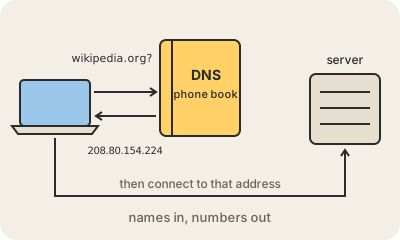
DNS (Domain Name System) is the service that translates the names people type, like wikipedia.org, into the IP address computers actually use to find each other. Every time you open a website, send an email or tap an app, a DNS lookup happens first, usually in a few milliseconds and without you noticing.
The lookup is a chain of questions. Your device asks a resolver (normally run by your internet provider, or a public one like 1.1.1.1 or 8.8.8.8). If the resolver does not have the answer cached, it asks the root servers, then the servers for .org, then the servers responsible for wikipedia.org, which reply with the IP address. The answer is cached along the way, so the next person asking gets it instantly.
DNS matters because names are stable and addresses are not. A company can move its site to another server or a CDN, change the DNS record, and nobody has to update anything. It is also a point of control: a DNS outage makes sites look down even when they are fine, and swapping resolvers is how some networks block or filter sites. Services like Amazon Route 53 sell DNS hosting.
Keep in mind
- DNS turns a domain name into an IP address before any connection is made.
- Resolvers cache answers, so most lookups are answered close to you.
- A DNS record change takes time to propagate because of those caches.
- If DNS is down, the site may be fine but nobody can find it.