Amazon Route 53
AWS's DNS service: it turns your domain name into the address of your servers.
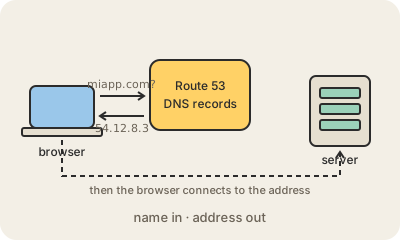
Route 53 is the AWS service for DNS, the system that translates a name like example.com into an IP address. You register a domain or bring one, create a hosted zone for it, and add records: 'the website is at this CloudFront distribution', 'mail goes to this server', 'the API is at this load balancer'. When someone types your domain, Route 53 answers in a few milliseconds from servers spread around the world.
Beyond plain name-to-address answers, it can route traffic cleverly: send users to the closest Region (latency routing), split them 90/10 between two versions of a site (weighted routing), or check that a server is healthy and stop sending people to it when it is not (health checks with failover). The name is a nod to port 53, the port DNS uses.
A typical example: a startup buys miapp.com through Route 53, points www at Amazon CloudFront, api at a load balancer in front of Amazon EC2, and sets a failover so that if the main Region goes down, traffic moves to a backup. It costs roughly half a dollar per hosted zone per month plus a small fee per million queries.
Keep in mind
- A hosted zone holds the DNS records for one domain.
- Routing policies: simple, weighted, latency, geolocation, failover.
- Health checks let it stop pointing users at a server that is down.
- You can register domains here too, but any registrar works with it.