High availability
Designing a system so it keeps working when one of its parts fails.
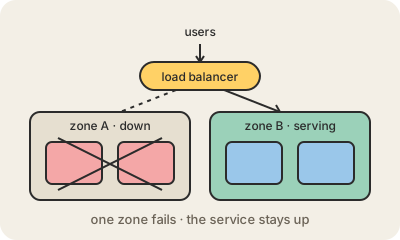
High availability (HA) is the goal of keeping a service up nearly all the time, even when individual parts break. Servers crash, disks fail, networks drop and whole data centers lose power; a highly available system is built so that none of those events, on its own, takes the service down. It is usually measured as a percentage of uptime, like 99.9% or 99.99%.
The core idea is redundancy: no single point of failure. Instead of one server, run several behind a load balancer. Instead of one data center, spread them across two or three availability zones, separate buildings in the same cloud region. Keep a standby copy of the database that takes over automatically if the main one fails, a switch called failover. Health checks constantly test each piece and route traffic away from anything that stops answering.
High availability is about everyday failures and keeps the service running through them, often without anyone noticing. Disaster recovery is the plan for the rare big event that knocks out a whole region. Every extra "nine" of uptime costs more in duplicated machines and engineering effort, so teams pick a target that matches how much an outage really hurts, and write it down in an SLA.
Keep in mind
- Keeps a service up when individual servers, disks or data centers fail.
- Built on redundancy: no single point of failure, spread across availability zones.
- Health checks and automatic failover move traffic away from broken parts.
- Each extra nine of uptime costs more; match the target to the real impact.