HTML
The text format that describes what is on a web page: headings, paragraphs, links.
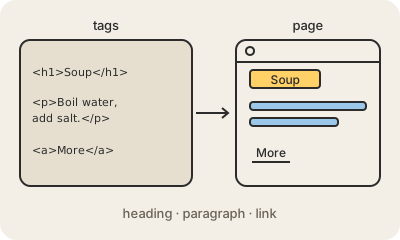
HTML (HyperText Markup Language) is the format every web page is written in. It is plain text with tags, short labels in angle brackets, that mark what each piece is: h1 for a main heading, p for a paragraph, a for a link, img for an image. In the file a tag is written between angle brackets, and most come in pairs that open and close around the content. The browser reads those tags and draws the page.
HTML is not a programming language: it does not make decisions or calculate anything. It describes structure and meaning. How the page looks (colors, fonts, layout) is the job of CSS, and what it does when you click is the job of JavaScript. The three work together on almost every site.
Good HTML matters more than it seems. Screen readers used by blind people rely on the tags to know what is a heading, a button or a menu. Search engines and AI tools read them to understand a page. You can see the HTML of any site yourself: in most desktop browsers, right-click a page and choose "View page source".
Keep in mind
- Plain text with tags like
h1,pandathat mark each part. - Describes structure; CSS handles looks and JavaScript handles behavior.
- The standard is maintained in the open by the WHATWG, with browser makers involved.
- Accessibility and search depend on using the right tags.