Programming language
A precise, written language people use to give instructions to a computer.
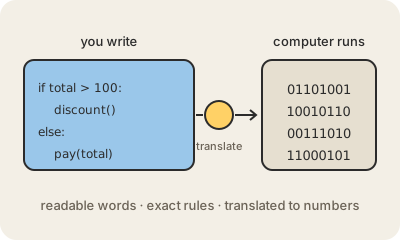
A programming language is a set of words, symbols and rules for writing instructions that a computer can follow. Computers only understand very simple operations expressed as numbers; a language like Python or JavaScript lets a person write if total > 100: apply_discount() instead, and a tool translates that into something the machine can run.
Unlike English or Spanish, a programming language leaves no room for interpretation. Every line has exactly one meaning, and a missing comma can stop a program from running. That strictness is the point: the computer does exactly what it is told, so the instructions have to be exact.
There are hundreds of languages because they make different trade-offs. Some are built for speed and control over the hardware (C, Rust), some for the web (JavaScript), some for being easy to read and quick to write (Python), and some for one narrow job, like querying a database with SQL. Most working programmers know a few and pick the one that suits the task.
Keep in mind
- It lets humans write instructions in readable text instead of raw numbers.
- Every statement has one exact meaning; small typos cause errors.
- A compiler or an interpreter turns the text into something the machine runs.
- Different languages suit different jobs: web pages, data, apps, hardware.