Data center
A building full of servers where the internet, the cloud and AI actually run.
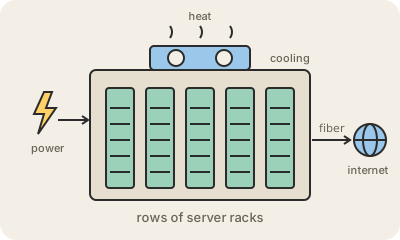
A data center is a building designed to hold thousands of computers (servers) running around the clock. When you watch a video, send a message, pay with your phone or ask an AI a question, the work happens in one of these buildings, not on your device. The cloud is not a cloud; it is data centers, owned by companies like AWS, Google, Microsoft and Meta, or rented out rack by rack by operators like Equinix.
Inside, servers sit in rows of metal racks connected by fast networks. Around them is the real engineering: a huge electricity supply with backup generators and batteries, so nothing ever goes dark; cooling that removes the heat all those machines produce; physical security; and redundant fiber links to the internet. A big data center draws as much power as a small city, which is why they are built near cheap electricity and, increasingly, next to their own power plants.
AI changed the scale. Training and running LLMs needs tens of thousands of GPUs packed together, drawing far more power per rack than ordinary servers and often needing liquid cooling. The 'AI data center' buildout, now measured in gigawatts, is why electricity, water and land became part of the AI conversation, and where NVIDIA's chips end up.
For the cloud, data centers are grouped into regions (a city or area) with several separate buildings each, so that a fire or a power failure in one does not take down the others. When a cloud provider says a service lives in us-east-1, it means a cluster of data centers in northern Virginia.
Keep in mind
- The physical place where cloud services, websites and AI models run.
- Power and cooling matter as much as the servers; big sites draw hundreds of megawatts.
- Built with redundancy: duplicated power, network and buildings so failures stay invisible.
- AI data centers pack GPUs densely and are driving a global race for electricity.