Data lake
Cheap storage where all your data is kept as raw files, to be sorted out later.
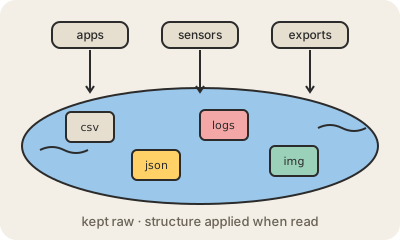
A data lake is a big, cheap store where an organization keeps all its data as files, in whatever shape it arrives: app logs, CSV exports, JSON events, images, sensor readings. Nothing has to be modeled before it lands. On AWS it is usually Amazon S3 with a folder layout and some rules; the structure is applied later, when someone reads the data.
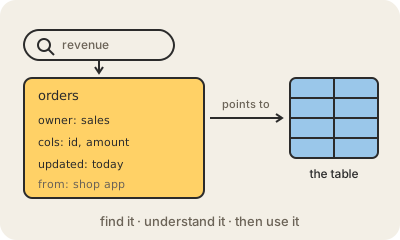
That is the key difference with a data warehouse. A warehouse asks you to clean and model data before loading it (schema on write); a lake accepts everything and lets each reader decide how to interpret it (schema on read). Query engines like Amazon Athena or Spark read the files where they are, and a catalog records what each folder contains so people can find it.
Lakes are popular because storage is cheap and nothing gets thrown away: tomorrow's question, or tomorrow's machine learning model, may need data nobody thought was useful today. The risk is the data swamp: years of undocumented, duplicated or half-broken files that nobody trusts. Many teams now combine both ideas in a lakehouse: files in the lake, stored in formats like Parquet, with a table layer on top that adds warehouse-style guarantees.
Keep in mind
- Stores raw files of any type; structure is applied when the data is read.
- Usually built on object storage like Amazon S3, which is cheap and practically unlimited.
- Without a catalog and some discipline, it turns into a data swamp.
- Lakes and warehouses complement each other; a lakehouse mixes both.