Data governance
The rules and roles that decide who owns data, who can use it and how it is kept right.
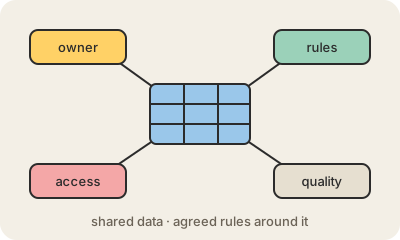
Data governance is the set of decisions, roles and rules an organization uses to manage its data on purpose instead of by accident. It answers questions like: who is responsible for the customer table, what does "active customer" mean, who is allowed to see salaries, how long do we keep old records, and what happens when two reports disagree.
In practice it is part paperwork and part tooling. There are data owners who answer for a dataset, data stewards who look after its quality day to day, written definitions, and access policies. Then there are tools that enforce them: permissions in the database or data warehouse, a data catalog that documents what exists, automatic quality checks and records of where each number came from (its lineage).
It matters because data is shared by many teams and regulated by laws such as Europe's GDPR. Without governance, the same metric gets calculated three different ways, sensitive data ends up in a spreadsheet nobody controls, and nobody can answer a regulator's question. Done badly, it turns into bureaucracy that slows everyone down; done well, it is mostly invisible and lets people trust the numbers.
Keep in mind
- Defines ownership, meanings, access and retention for an organization's data.
- Mixes people (owners, stewards) with tools (permissions, catalogs, quality checks).
- Helps meet privacy and record-keeping laws such as GDPR.
- The goal is trusted data, not more bureaucracy.