Spreadsheet vs database
Why a company that runs on Excel eventually needs a real database.
A spreadsheet, like Excel or Google Sheets, is a grid where you can type anything in any cell and add formulas. That freedom is its strength: anyone can start a customer list or a budget in minutes. A database is stricter. You define the structure first (this column is a date, this one an email, every order must belong to an existing customer), and the system enforces it for every record, forever.
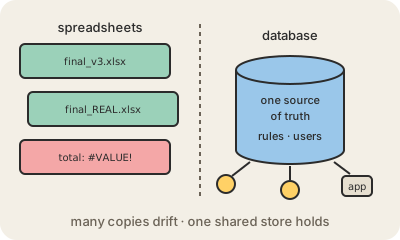
Most businesses start on spreadsheets, and the trouble arrives with growth. Copies multiply by email, and nobody knows whether clients_final_v3.xlsx or clients_final_REAL.xlsx is current. Two people edit at once and one overwrites the other. Someone types "N/A" in a price column and a total silently goes wrong. Files get slow, and Excel itself stops at roughly a million rows. And there is no reliable record of who changed what, or a way to let one person see only their own region.
A database solves those exact problems: one shared source of truth, many people and apps reading and writing safely at the same time, rules that reject bad data, relationships between tables so customer details live in one place, permissions and backups. The move does not have to be dramatic. Many teams go first to tools like Airtable, then to a proper database with an app or a BI tool on top, and keep spreadsheets for what they do best: quick personal analysis.
Keep in mind
- Spreadsheets are flexible; databases enforce structure and rules.
- Warning signs: many file versions, overwritten edits, broken totals, slow files.
- Databases handle many simultaneous users, permissions and history.
- Spreadsheets stay useful for quick analysis on top of the database.