Spotify
A Swedish streaming service for music and podcasts, free with ads or paid monthly.
Spotify was founded in 2006 in Stockholm by Daniel Ek and Martin Lorentzon, and launched in 2008, at a time when much of the music online was pirated. Its bet was that listening instantly, without downloading files, could be more convenient than piracy. You open the app, pick a song and it starts playing in a second or two, from a catalog of many millions of tracks, plus podcasts and audiobooks.
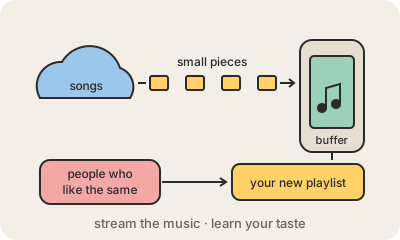
Behind that second there is a lot of engineering. Each song is stored on servers in the cloud, compressed at several quality levels. The app asks for the first few seconds, starts playing and keeps fetching the rest while you listen, with a small buffer so a weak connection does not cut the music. Songs you play often are kept on your phone, and Premium users can download them, encrypted, to listen offline. In 2016 Spotify started moving its infrastructure to Google Cloud.
The other big piece is recommendations. Spotify looks at what millions of people play, skip and save, and finds patterns: people who love these ten songs also tend to love this other one. It combines that with an analysis of the audio itself and of what is written about artists online, and turns it into personalized playlists such as Discover Weekly. It makes money in two ways: ads for free listeners and Premium subscriptions, and it pays a large share of that money to record labels, publishers and artists for the rights to the music.
Keep in mind
- Founded in 2006 in Stockholm by Daniel Ek and Martin Lorentzon; launched in 2008.
- Streams music in small pieces with a buffer, instead of downloading whole files.
- Recommendations come from comparing the listening habits of many people.
- Earns money from ads and Premium subscriptions, and pays rights holders a large share.