Big data
Data so large, fast or messy that one ordinary computer cannot handle it.
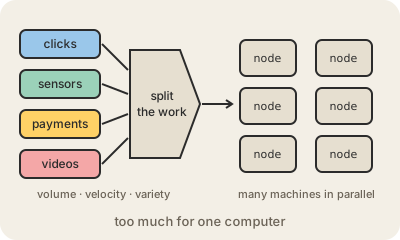
Big data describes collections of data too big or too fast for the usual tools on a single computer. The classic definition uses three Vs: volume (huge amounts, far beyond what fits on one machine), velocity (arriving constantly, like every click on a website or every reading from thousands of sensors) and variety (many shapes at once: tables, text, images, logs).
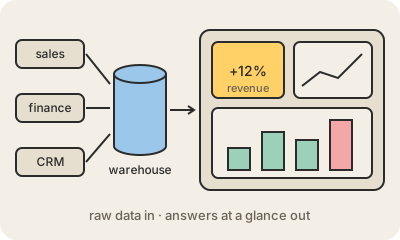
The term became popular in the late 2000s, when companies like Google and Yahoo needed to process the whole web. Their answer was to split the data into pieces and process them in parallel across many cheap machines, an idea that led to open source tools like Hadoop and later Spark. Today the same idea powers cloud data warehouses, data lakes and streaming systems, so a company can query years of records without owning a single server.
Examples are everywhere: a streaming service recommending shows from what millions of people watched, a bank flagging an unusual card payment in real time, a city timing traffic lights from road sensors. The term itself has faded a little, because handling large data has become normal. What has not changed is the lesson behind it: more data only helps if it is good data and someone asks it a useful question.
Keep in mind
- The three Vs: volume, velocity and variety.
- Handled by splitting work across many machines in parallel.
- Hadoop and Spark started it; cloud warehouses and lakes made it common.
- Big is not the same as useful: quality and good questions still matter.