RAM
The computer's short-term memory: fast, small and wiped when you turn it off.
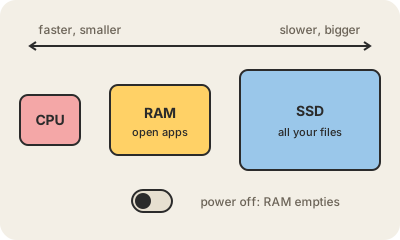
RAM (Random Access Memory) is where a computer keeps whatever it is working on right now: the open programs, the document you are editing, the browser tabs. The CPU can read and write any part of it in nanoseconds, far faster than an SSD. The catch is that it is volatile: cut the power and everything in it is gone, which is why you save files to disk.
For most people the amount matters more than the speed. If the programs you have open need more RAM than you have, the operating system starts shuffling parts of them to the SSD (swapping) and everything crawls. That is the classic 'my laptop is slow with 40 tabs open' problem. Phones have roughly 6 to 12 GB, laptops 8 to 32, servers hundreds.
RAM comes as chips soldered onto the board or on removable sticks. Samsung, SK Hynix and Micron make most of the memory chips in the world. GPUs have their own, faster kind (VRAM, and HBM in AI chips), and for AI the question 'does the model fit in memory?' is usually about that.
Example: an LLM with 7 billion parameters needs roughly 14 GB just to hold its weights. On a laptop with 16 GB of RAM it barely fits; on one with 8 GB it does not run at all. Memory, not speed, is the first wall you hit.
Keep in mind
- Fast and volatile: holds running programs, forgets everything when powered off.
- Too little RAM forces swapping to disk, the usual cause of a sluggish computer.
- Measured in gigabytes; more RAM lets you keep more open at once.
- AI models must fit in memory (GPU VRAM or system RAM) to run at all.