Raspberry Pi
A cheap, credit-card-sized computer made for learning and tinkering.
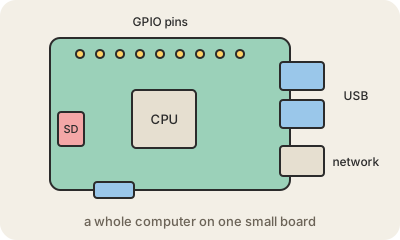
A Raspberry Pi is a small, inexpensive computer built on a single board about the size of a credit card. It has a processor, memory, USB ports, a video output and a row of pins for connecting electronics. Add a power supply, a microSD card with an operating system (usually a version of Linux), a keyboard and a screen, and it works as a basic desktop computer.
It was created in the UK by the Raspberry Pi Foundation, an educational charity, and first went on sale in 2012 to help children learn programming and how computers work inside. It quickly became a favorite of hobbyists, schools and engineers too. People use it as a home media center, a retro game console, a weather station, a small home server, the brain of a robot or the controller of a sensor in a factory.
What makes it special is that row of GPIO pins (general-purpose input/output). From a short Python program you can switch on a light, read a temperature sensor or drive a motor, which turns code into something you can touch. It will not replace a laptop for heavy work, but it is a cheap and safe place to experiment: if you break the setup, you rewrite the memory card and start again.
Keep in mind
- A full computer on one small board, usually running Linux from a microSD card.
- Made by the Raspberry Pi Foundation, a UK charity, to teach computing.
- Its GPIO pins let programs control lights, sensors and motors.
- Common uses: learning, home servers, media centers and IoT projects.