USB
The standard plug for connecting and charging almost everything.
USB (Universal Serial Bus) is the standard that lets a computer talk to keyboards, mice, printers, phones, cameras and drives through one kind of port, and lets a cable carry power at the same time. Before it arrived in the mid-1990s, each kind of device had its own connector. USB replaced most of them, and also became the default way to charge small electronics.
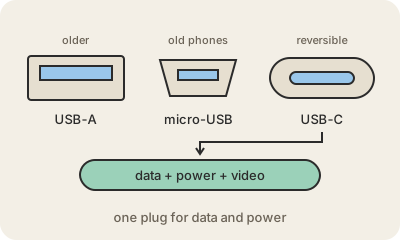
Two things get confused because both are called USB. One is the connector, the physical shape: the flat rectangular USB-A, the small micro-USB of older phones, and the oval, reversible USB-C that most new devices use. The other is the version, which sets the speed and features: USB 2.0, USB 3.x, USB4. A USB-C port can be anything from slow to very fast, depending on the version behind it and on the cable.
USB-C also carries much more power than older USB, enough to charge most laptops, using a negotiation called USB Power Delivery: the charger and the device agree on how much power to send before sending it. It can carry video to a monitor as well. That is why one cable can now replace several, and why the European Union made USB-C the required charging port for phones and many other devices sold there.
Keep in mind
- One standard for connecting devices and carrying power.
- Connector shape (USB-A, USB-C) and version (USB 2.0, 3.x, USB4) are different things.
- USB-C is reversible and can carry data, video and enough power for a laptop.
- Two USB-C ports or cables that look the same can differ a lot in speed.