Internet of things
Everyday objects with sensors and a network connection: thermostats, meters, doorbells.
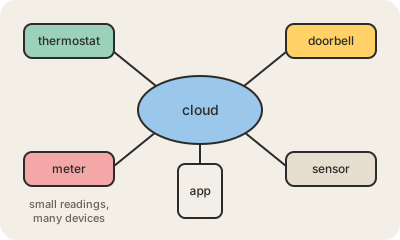
The Internet of things (IoT) is the name for ordinary objects that carry a small computer, a few sensors and a network connection: a thermostat you control from your phone, a smart electricity meter, a video doorbell, a fitness band, a soil-moisture sensor in a field, a tracker inside a shipping container. Each one measures or does something and reports over the internet.
Most IoT devices are simple. A cheap chip reads a sensor and sends a few numbers every so often, over Wi-Fi, Bluetooth or a mobile network, to a service in the cloud. There the data is stored, shown in an app and used to trigger actions: turn on the heating, send an alert when a freezer warms up, schedule maintenance before a machine breaks. The value is rarely in one device; it is in thousands of them reporting together.
The weak spot is security. Many devices ship with default passwords, rarely get firmware updates and stay plugged in for years, and attackers have taken over large numbers of cameras and routers to build botnets. Good practice is boring but it works: change the default password, keep the firmware updated, and put these devices on a separate network when you can.
Keep in mind
- Ordinary objects with a sensor, a small chip and a network connection.
- They usually send small readings to a cloud service and an app.
- The value comes from many devices reporting together.
- Default passwords and missing updates make them easy targets.