Linux
A free, open source operating system that runs most of the internet's servers.
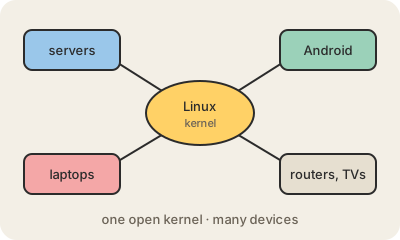
Linux is a free and open source operating system. Strictly, the name refers to its kernel, the core that talks to the hardware, which Linus Torvalds started as a hobby project in 1991 and which thousands of people and companies now maintain together. In everyday use, "Linux" means the whole system: the kernel plus the tools, desktop and apps packaged around it.
Those packages are called distributions ("distros"): Ubuntu, Debian, Fedora and Red Hat Enterprise Linux are well-known ones. They all share the same kernel but choose different software, update schedules and support. Anyone can download most of them for free, read the source code and change it.
You probably use Linux every day without noticing. Most web servers and cloud machines run it, Android is built on the Linux kernel, and it powers routers, smart TVs, cars and virtually all of the world's fastest supercomputers. On desktops and laptops it is less common, but developers often like it because the same system runs on their computer and on their servers.
Keep in mind
- Started by Linus Torvalds in 1991; free and open source.
- "Linux" is the kernel; distributions like Ubuntu or Debian package a full system around it.
- Runs most servers and cloud machines, and Android is built on it.
- Usually controlled from the command line on servers.