Source code
The human-readable text that programmers write and that a program is built from.
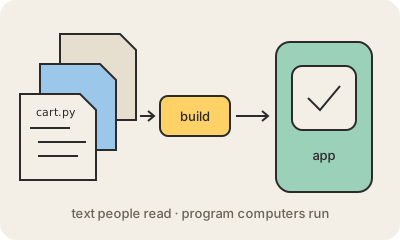
Source code is the set of text files where programmers write a program, in a programming language like Python, Java or JavaScript. It is meant to be read by people: it has names that make sense, comments that explain decisions, and a structure split into files and folders. All the source code of a product together is often called its codebase.
What you install on a phone or a laptop is usually not the source code but the result of building it: a compiler or other tools turn the text into a form the computer runs quickly and that is very hard for humans to read. That is why having the source code matters. With it you can understand exactly what a program does, fix it, change it or rebuild it; without it you mostly cannot.
Companies usually treat their source code as a valuable secret. Open source projects do the opposite: they publish it so anyone can read, reuse and improve it, under a license that sets the rules. Either way, source code today almost always lives in a version control system like Git, which keeps the full history of who changed what and when.
Keep in mind
- Readable text, written by people in a programming language.
- It is built (compiled or packaged) into the program that users actually run.
- Having the source lets you inspect, fix and change a program.
- Usually kept in Git; published openly in open source projects.