VRAM
The memory built into a graphics card, where the GPU keeps what it is working on.
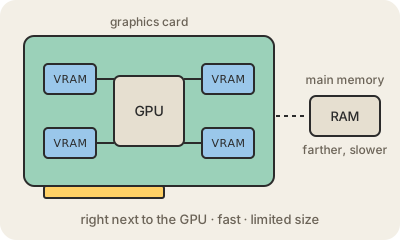
VRAM (video RAM) is the memory that belongs to a GPU. It sits on the graphics card or right beside the GPU chip, separate from the computer's main RAM, and holds whatever the GPU is working on: the textures and frames of a game, the video being edited, the weights of an AI model. Today it is usually a fast type called GDDR or, in data-center GPUs, HBM (High Bandwidth Memory), made of stacked chips placed right next to the processor.
Two numbers matter. Capacity, in gigabytes, decides what fits: if a game's textures or a model's weights do not fit in VRAM, the GPU has to fetch data from much slower memory elsewhere, and performance collapses or the job refuses to run. Bandwidth, in gigabytes per second, decides how fast the GPU can be fed. A GPU has thousands of cores, and they sit idle if data cannot reach them quickly enough.
VRAM is why conversations about AI talk so much about memory. A large language model's weights must fit in VRAM to run quickly, so the amount of memory often matters more than raw speed when choosing hardware, and big models are split across several GPUs. That is also why high-end AI chips carry large amounts of expensive HBM. Many laptops and all phones have no separate VRAM: the GPU shares the main memory with the CPU, which is cheaper and simpler but usually slower.
Keep in mind
- VRAM is the GPU's own memory, separate from the main RAM.
- Capacity decides what fits; bandwidth decides how fast the GPU is fed.
- AI models must fit in VRAM to run quickly, so memory size often limits what you can run.
- Gaming cards use GDDR; data-center AI chips use stacked HBM.