Samsung
Korean giant that sells phones and TVs, and makes much of the world's memory chips.
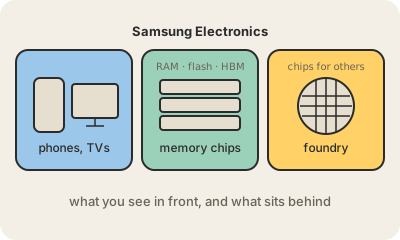
Samsung Electronics, the best-known part of the South Korean Samsung group, is two businesses in one. The one you see is consumer electronics: Galaxy phones, TVs, fridges, washing machines. The one you mostly do not see is semiconductors, and it is just as important: Samsung is one of the world's largest makers of memory chips, the RAM and flash storage inside phones, laptops, SSDs and servers.
Memory is a commodity business with dramatic cycles: when demand outruns supply, prices and profits soar; when factories overproduce, prices crash. Only a few companies make it at scale (Samsung, SK Hynix and Micron are the big three), so Samsung's results are a common barometer for the whole electronics industry. The AI boom made one kind of memory especially valuable: HBM (high-bandwidth memory), the stacked chips that sit next to GPUs in AI accelerators.
Samsung also runs a foundry, manufacturing chips designed by other companies the way TSMC does, and it is one of the very few able to work at the leading edge. It also designs its own phone processors, the Exynos line. That makes it unusual: a company that competes with Apple in phones while also being a supplier to Apple and many others.
Keep in mind
- Sells phones, TVs and appliances, and is one of the largest makers of memory chips.
- Memory (RAM, flash, HBM for AI) is a cyclical business with few big players.
- Its foundry manufactures chips for other companies, competing with TSMC.
- It is both a competitor and a supplier to many of its customers.