Edge computing
Processing data close to where it is created, instead of in a distant data center.
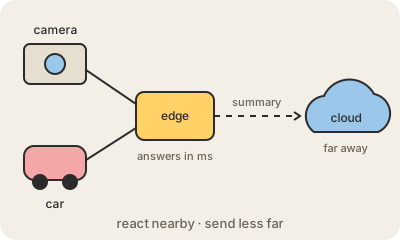
Edge computing means running computation near the people or devices that need it, at the "edge" of the network, rather than sending everything to a big data center hundreds or thousands of kilometers away. The edge can be a small server in a factory or a store, equipment in a mobile network tower, a city-level point of presence, or the device itself: a camera, a car or a phone.
The main reasons are physics and volume. Every trip to a distant data center adds latency, and some decisions cannot wait: a factory robot that must stop when a person walks in front of it, or a car reacting to the road. Other times the problem is sheer data: a set of security cameras produces far too much video to upload, so it is analyzed on site and only the alerts go to the cloud. Keeping data local can also help with privacy rules and keep working when the internet connection drops.
Edge and cloud work together; the edge does not replace the cloud. A common split is: react locally, then send summaries to the cloud for storage, analytics and training models. Cloud providers offer edge options, from functions that run in CDN locations close to users, to hardware they install in your own building. The trade-off is many small, scattered machines that are harder to update, secure and monitor than a few big ones.
Keep in mind
- Computes near the data source: in a store, a factory, a tower or on the device.
- Cuts latency and the amount of data sent over the network.
- Works with the cloud: react locally, send summaries centrally.
- Many scattered machines are harder to update, secure and monitor.