Amazon Redshift
AWS's data warehouse: SQL over huge tables, built for analysis rather than apps.
Redshift is the data warehouse of AWS: a database designed to answer analytical questions over very large amounts of data, like "revenue by country and month for the last five years". You load data from your apps, Amazon S3 or other sources, and analysts query it with SQL, usually through a dashboard tool.
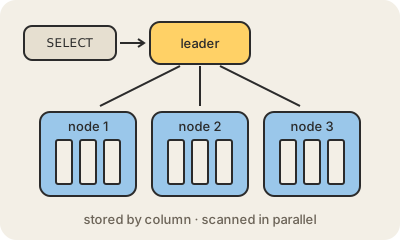
Two design choices make it fast at that job. It stores data by column instead of by row, so a query that only needs country and amount reads just those two columns, highly compressed. And it splits each table across several machines (nodes) that work in parallel: a leader node plans the query, the compute nodes each scan their slice, and the leader combines the answers.
You can run it as a provisioned cluster with a fixed number of nodes, or as Redshift Serverless, where AWS adds capacity while queries run and you pay for the compute actually used. It can also query files that stay in S3 without loading them. What it is not good for is the stream of small reads and writes behind an app's checkout page; that is the job of a regular database like Amazon RDS or Amazon DynamoDB.
Keep in mind
- A columnar data warehouse queried with SQL (its dialect descends from PostgreSQL).
- Spreads data across nodes that scan in parallel.
- Comes as provisioned clusters or as Redshift Serverless.
- Built for analytics over big tables, not for an app's many small transactions.