Amazon RDS
A ready-made relational database that AWS keeps patched, backed up and running.
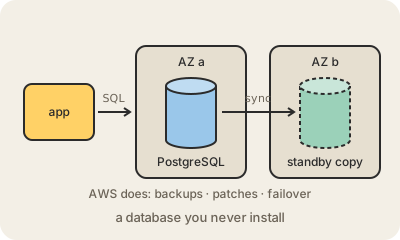
RDS (Relational database Service) gives you a database such as PostgreSQL, MySQL, MariaDB, SQL Server or Oracle without installing or maintaining it yourself. You choose the engine and the size, and AWS hands you an address and a password. Your app connects with SQL exactly as it would to a database on your own server.
What you stop doing: installing updates, scheduling backups, replacing a failed disk, getting up at night when it crashes. RDS takes automatic backups, applies patches in a maintenance window you pick, and with Multi-AZ keeps a synchronized standby copy in another Availability Zone that takes over in a minute or two if the main one fails. Aurora is AWS's own engine, compatible with PostgreSQL and MySQL, built for more speed and resilience.
A typical example: an online shop keeps its customers, orders and products in a PostgreSQL database on RDS, and the developers never log into the database server, because there is none to log into. The trade-off is money: you pay for the instance every hour it runs, busy or idle, and it costs more than running the same engine yourself on Amazon EC2.
Keep in mind
- Managed engines: PostgreSQL, MySQL, MariaDB, SQL Server, Oracle and Aurora.
- Automatic backups let you restore to any point within the last 35 days.
- Multi-AZ keeps a standby copy that takes over if the main one fails.
- You still design the tables and write the queries; RDS only runs the server.