Emoji
Little pictures that are really text characters, drawn differently by each phone maker.
An emoji is a small picture you can type, like 😀, 🍕 or ❤️. The word is Japanese: "e" means picture and "moji" means character, so it has nothing to do with "emotion". Emoji appeared on Japanese mobile phones in the late 1990s, and in 2010 they were added to Unicode, the standard that gives every character in every writing system its own number.
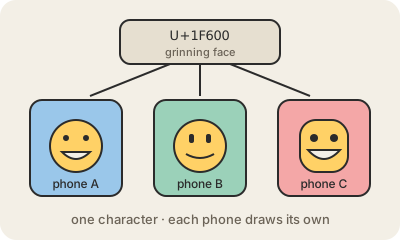
That is the key idea: to a computer an emoji is text, not an image. 😀 is the character U+1F600, officially named "grinning face", in the same way that the letter A is U+0041. When you send it, your phone sends that number, a few bytes, and the receiving phone looks it up in its own emoji font and draws its own picture. Some emoji are combinations: a skin tone is a modifier added after the base character, and many family or profession emoji are several characters glued together with an invisible joiner.
Because Unicode only sets the number, the name and a rough description, every company draws its own version. Apple, Google, Samsung and Microsoft each have their own designs, so the same emoji can look happier, sadder or simply different on each phone, and occasionally that changes its meaning. New emoji are proposed to the Unicode Consortium and a batch is approved most years; if your phone is not updated, a new emoji may show up as an empty box or as its separate pieces.
Keep in mind
- An emoji is a Unicode character, sent as a number, not as an image.
- Each company draws its own design, so emoji look different across phones.
- Skin tones and many family emoji are combinations of several characters.
- Unicode approves new emoji; old phones may show them as boxes.