Deepfake
A fake video, photo or voice made with AI to look and sound like a real person.
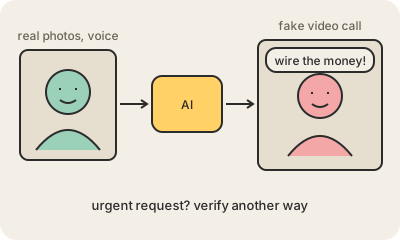
A deepfake is media created or altered with AI so that a real person appears to say or do something they never did. It can be a face swapped into a video, a cloned voice reading any text, or a photo that never happened. The word joins 'deep learning' and 'fake', and comes from a Reddit user who posted face-swapped videos in 2017.
Making one used to take skill and hours of footage. Today generative AI tools can clone a voice from a short recording and animate a face from a few photos, and the results keep getting harder to tell apart from the real thing. There are honest uses: dubbing films into other languages, restoring voices for people who lost them, visual effects, satire that is clearly labeled.
The harm comes from deception. Scammers call parents with a cloned voice of their child asking for money, or pose as a company's boss on a video call to order an urgent transfer. Deepfakes are used for non-consensual sexual images, which many countries now treat as a crime, and to spread political misinformation. Detection tools exist but are not reliable. The best defense is a habit: if a message asks for money, passwords or urgency, check it through another channel you already trust, such as calling back on a known number or agreeing on a family code word.
Keep in mind
- AI-made video, audio or images that imitate a real person.
- A voice can be cloned from a short recording.
- Common in scams: fake calls from relatives or bosses asking for money.
- Verify urgent requests through a second, trusted channel.
Go deeper
- Deepfake on Wikipedia
- What is a deepfake? (IBM)
- Increasing threat of deepfake identities (US DHS, PDF)