AGI
A hypothetical AI able to do most mental tasks as well as a person. Not here yet.
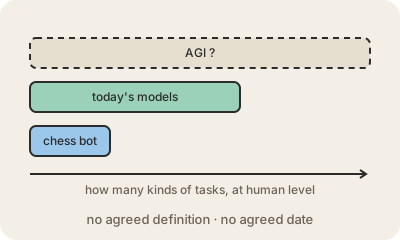
AGI, short for artificial general intelligence, is the idea of an AI system that could learn and do most intellectual tasks a human can, at a human level or better, instead of being good at one narrow thing. A chess program that cannot read a recipe is 'narrow' AI. An AGI could, in principle, switch from diagnosing a disease to planning a trip to doing original research, and learn new skills along the way the way people do.
There is no agreed definition, and that is the first thing to know. Some define it by tasks ('matches an expert at most jobs done at a computer'), some by economics ('could do most work people are paid for'), some by abilities like learning quickly from little data and adapting to the unexpected. Depending on the definition, a given system might count or not, which is why claims that AGI is near, or already here, are hard to evaluate.
Today's large language models are much more general than older AI: the same model can write, translate, code and explain. But they still make mistakes no competent person would, struggle to learn on the job, and depend on human direction. Experts disagree widely on whether and when AGI will arrive, with guesses ranging from a few years to many decades to never. Several AI companies say building it is their goal, and its possible benefits and risks are a serious topic in research and policy. When someone mentions AGI, a good first question is: what exactly do you mean by it?
Keep in mind
- AGI means AI that is broadly capable, not good at just one task.
- There is no single agreed definition or test.
- Current models are more general than before but still fall short.
- Expert predictions on timing differ enormously.