ChatGPT
OpenAI's chat assistant, the app that brought AI chatbots to the general public.
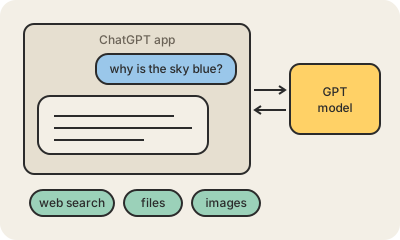
ChatGPT is a chat assistant made by OpenAI. You type or say something in plain language (a question, a request, a half-formed idea) and it answers in conversation: it explains, drafts, summarizes, translates, writes code, and keeps the thread so you can ask follow-ups. It launched as a free research preview on 30 November 2022 and spread faster than almost any consumer product before it. For many people, 'ChatGPT' became the name of the whole idea.
It is important to separate the app from the model. ChatGPT is the product you use, on the web, on phones and on computers. The thinking happens in OpenAI's GPT models, large language models that OpenAI keeps replacing with newer versions; GPT stands for 'generative pre-trained transformer'. Over time the app gained more abilities around the model: searching the web, reading uploaded files and photos, generating images, talking by voice and remembering preferences across chats.
There is a free version and paid plans for individuals and companies. Developers who want GPT inside their own products do not use ChatGPT itself; they use OpenAI's API. Like every chatbot built on a language model, ChatGPT can sound sure of things that are false, so anything important it tells you (a dose, a law, a quote) is worth checking against a real source.
Keep in mind
- Made by OpenAI and launched on 30 November 2022.
- ChatGPT is the app; GPT models are the engines inside it.
- Can search the web, read files and images, and talk by voice.
- Free to start, with paid plans; developers use the API instead.