Generative AI
AI that creates new text, images, audio or code instead of just sorting things.
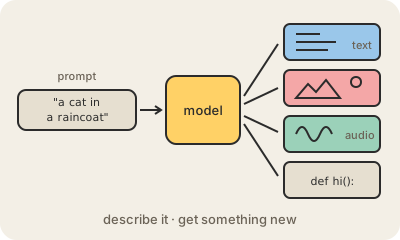
Generative AI is the kind of AI that produces new content: a paragraph, an email, a picture, a song, a voice, a video, a piece of code. Older AI was mostly about deciding things, like whether a photo shows a dog or whether a payment looks like fraud. Generative AI goes the other way: you describe what you want, usually in plain words, and it makes something that did not exist before.
It works by learning the patterns of an enormous amount of existing material. A text model like the ones behind ChatGPT, Claude or Gemini has read so much writing that it can predict, word after word, what a plausible answer looks like. An image model has seen so many pictures with captions that it can turn 'a cat in a raincoat, watercolor' into a new image. What comes out is new, but built from patterns in what went in.
It became a mainstream topic in late 2022, when ChatGPT and image generators reached the general public. It is useful for drafting, summarizing, translating, brainstorming and coding. It also brings real problems: it can state false things with confidence, imitate real people's voices and faces, repeat the biases of its training data, and raise open questions about the copyright of the material it learned from.
Keep in mind
- Creates new content from a description, called a prompt.
- Learns from huge amounts of existing text, images or sound.
- Output sounds or looks convincing even when it is wrong.
- Raises open questions about copyright, deepfakes and bias.