Qualcomm
Designs the chips, and owns key patents, that let phones talk to cell towers.
Qualcomm is an American company founded in 1985 in San Diego by Irwin Jacobs and partners. It became known for CDMA, a way of sharing radio frequencies among many phones at once, which ended up at the heart of 3G networks. Since then it has been one of the main inventors behind each generation of mobile technology, 4G and 5G included.
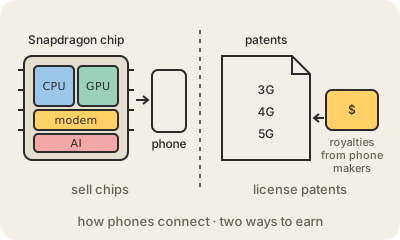
It makes money in two ways. The first is chips. Its Snapdragon line puts a whole phone's brain on a single chip: the CPU (based on Arm designs), the GPU for graphics, an AI accelerator, the camera processor and the modem, the part that talks to cell towers. Many Android phones run on Snapdragon, and Qualcomm also sells modems on their own, plus chips for cars, laptops, headsets and connected devices. Like NVIDIA or Apple, it is fabless: it designs the chips and companies such as TSMC and Samsung manufacture them.
The second is licensing. Qualcomm owns a large portfolio of patents that are essential to cellular standards, so almost anyone who makes a phone that connects to 3G, 4G or 5G pays it a royalty, even if they use another company's chips. Licensing is a smaller share of its sales than chips, but a very profitable one, and it has led to long legal disputes with phone makers and regulators over how much it can charge.
Keep in mind
- Founded in 1985 in San Diego; a key inventor of 3G, 4G and 5G technology.
- Its Snapdragon chips power many Android phones, with CPU, GPU and modem in one piece.
- Fabless: it designs chips and others, like TSMC, manufacture them.
- Earns royalties from patents essential to cellular standards.