QR code
A square pattern of dots that a phone camera reads, usually to open a link.
A QR code ("quick response") is a two-dimensional barcode: a square grid of black and white modules that stores text, most often a web address. It was invented in 1994 by Masahiro Hara at Denso Wave, a Japanese company of the Toyota group, to track car parts in factories. Denso Wave holds the patent but chose not to enforce it, so anyone can create and read QR codes for free, which helped them spread everywhere.
The three big squares in the corners tell the camera where the code is and which way it is turned, so it can be read at any angle. The data is stored with error correction: extra information that lets the code be read even when part of it is dirty, torn or covered, up to roughly a third of it at the highest setting. That is why some codes can have a logo in the middle. Today any phone camera can read them, and they are used for restaurant menus, payments, boarding passes, Wi-Fi passwords and tickets.
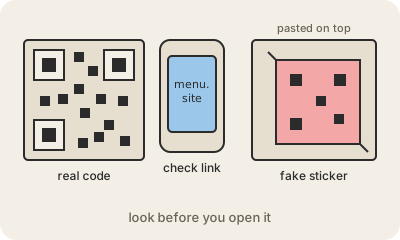
The risk is that a QR code is unreadable to people: you cannot tell where it leads just by looking. Scammers print fake codes and stick them over real ones on parking meters, posters or restaurant tables, sending you to a copy of a payment or login page to steal your card or password. This is sometimes called quishing, a mix of QR and phishing. Before opening a link from a code, check the address your phone shows, be suspicious of stickers on top of other codes, and pay through the official app or website when you can.
Keep in mind
- Invented in 1994 at Denso Wave to track car parts; free to use.
- Error correction lets it work even when part of it is damaged.
- Most codes just hold a link; the phone opens it for you.
- Fake codes stuck over real ones are a common scam: check the link first.