Incident response
The rehearsed plan an organization follows when a security attack actually happens.
Incident response is what a company does from the moment it suspects a security incident (ransomware on a laptop, a stolen password used at 3 a.m., customer data showing up for sale) until things are back to normal and the lesson is written down. The key word is plan: who gets called, who can shut down a server, who talks to lawyers, customers and the press. Deciding that in the middle of the crisis is how small incidents become big ones.
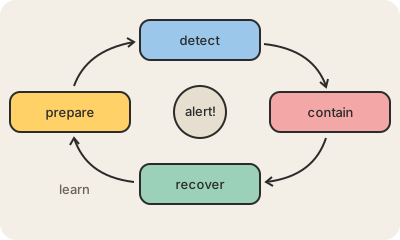
The classic guide is NIST SP 800-61, which describes a cycle. Preparation: contacts, tools, backups and practice drills before anything happens. Detection and analysis: alerts from a SIEM or an EDR, and figuring out what really happened and how far it spread. Containment, eradication and recovery: isolating infected machines, resetting credentials, removing the attacker's foothold and restoring clean systems. Post-incident activity: a postmortem that feeds back into preparation. The 2025 revision of the guide ties this cycle to NIST's broader Cybersecurity Framework 2.0.
Large organizations keep a dedicated team, often called a CSIRT, usually working alongside the security operations center; smaller ones hire an outside firm on retainer, sometimes through their cyber insurance. Two details matter more than people expect: evidence (logs and disk images) must be preserved before systems are wiped, and laws set deadlines. Under the GDPR, for example, a personal data breach generally has to be reported to the authority within 72 hours of becoming aware of it.
Keep in mind
- The plan is written and rehearsed before any attack.
- Typical phases: prepare, detect, contain and recover, learn.
- Preserve logs and evidence before wiping anything.
- Laws like the GDPR set deadlines for reporting breaches.
Go deeper
- NIST SP 800-61 Rev. 3: Incident Response Recommendations
- Incident management (UK National Cyber Security Centre)
- Computer security incident management on Wikipedia