IBM
A century-old computer company that sells software, consulting and mainframes.
IBM (International Business Machines) is an American company that began in 1911 making machines to tabulate, record and count, and took its current name in 1924. For most of the 20th century it was the name in computing: its punched-card systems ran censuses and payrolls, and its mainframes, large, very reliable computers starting with the System/360 in 1964, became the core of banks, airlines and governments. In 1981 the IBM PC set the standard for the personal computer.
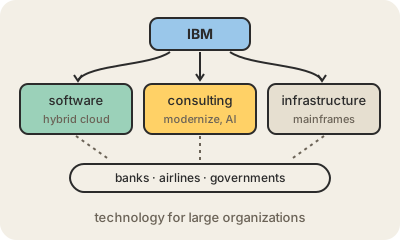
IBM no longer sells PCs (it sold that business to Lenovo in 2005). Today it sells mainly to large organizations, in three ways. Software, much of it from Red Hat, which IBM bought in 2019, to run applications across a company's own data centers and several clouds, an idea it calls hybrid cloud. Consulting, where its staff help companies modernize systems and adopt AI. And infrastructure: modern mainframes, still used for card payments and bank accounts, and powerful servers.
It earns money from software licenses and subscriptions, consulting fees and hardware sales with long support contracts. IBM is also known for research: its labs developed the hard disk drive, the relational database idea behind SQL and the DRAM memory chip, built Deep Blue, which beat the world chess champion in 1997, and Watson, which won a TV quiz show in 2011. Today one of its long bets is quantum computing.
Keep in mind
- Founded in 1911; named IBM since 1924.
- Its mainframes still process a large part of the world's banking and card transactions.
- Makes money from software (including Red Hat), consulting and hardware for large organizations.
- Its labs invented the hard disk drive and the relational database idea, and work on quantum computing.