Hybrid and multi-cloud
Running systems across your own servers and the cloud, or across several cloud providers.
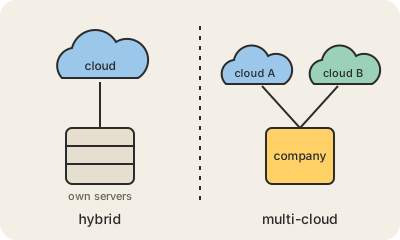
A hybrid cloud mixes a company's own servers, in its offices or a rented data center (called on-premises or on-prem), with a public cloud like AWS, Azure or Google Cloud, connected so they work as one system. A bank might keep its core accounts on its own hardware for regulatory reasons while running its mobile app and analytics in the cloud. A factory might process sensor data locally and send summaries to the cloud.
Multi-cloud means using more than one public cloud provider. Sometimes it is deliberate: one provider's AI services, another's data warehouse, or a requirement not to depend on a single vendor. Very often it is just history: one team chose AWS, an acquired company runs on Azure, and marketing uses tools hosted on Google Cloud. Hybrid and multi-cloud are different ideas, and many companies are both.
The benefits are flexibility, keeping data where rules require it, and less dependence on one vendor. The costs are real: each provider has its own services, security model, billing and skills, and moving data between them takes time and can carry fees for data leaving a provider. Tools like Kubernetes and infrastructure as code help by describing systems in a way that works in more than one place, but they do not make the differences disappear.
Keep in mind
- Hybrid: your own servers (on-premises) plus a public cloud, working together.
- Multi-cloud: two or more public cloud providers at the same time.
- Reasons include regulation, latency, best-of-breed services and avoiding lock-in.
- Costs: more complexity, more skills to keep, and fees to move data out.