Data science
Using statistics, code and business sense to answer questions with data.
Data science is the work of getting useful answers out of data. It mixes three skills: statistics, to know what the numbers really say and how sure you can be; programming, usually in Python, R and SQL, to handle data too big for a spreadsheet; and domain knowledge, to ask questions that matter for a business, a hospital or a lab.
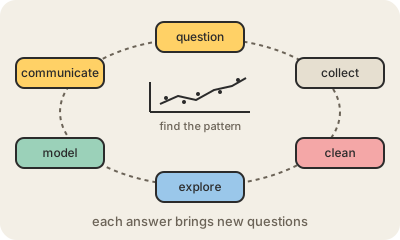
A typical project starts with a question, like "which customers are about to cancel?". The data scientist gathers data from databases and files, then cleans it: fixing typos, filling or removing gaps, merging sources that disagree. That step famously takes most of the time. Then comes exploring with charts, building a model that finds patterns or makes predictions, and finally explaining the result to people who will act on it, often in a notebook, a dashboard or a short presentation.
It overlaps with neighbors. Machine learning is one of its main tools, used when the goal is prediction; business intelligence focuses more on reporting what already happened; data engineering builds the pipelines that bring the data in. The role grew in the 2010s as companies collected more data than they knew what to do with, and it remains central now that AI models are trained and evaluated with the same methods.
Keep in mind
- Combines statistics, programming and knowledge of the field.
- Cleaning and preparing data takes most of the time.
- Ends with communication: an answer nobody understands changes nothing.
- Machine learning is a core tool, but not the whole job.