Cryptojacking
Secretly using someone else's computers to mine cryptocurrency for yourself.
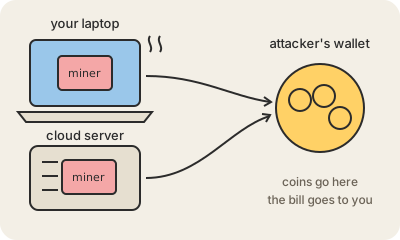
Cryptojacking is when an attacker runs cryptocurrency mining software on computers they do not own. Mining means doing huge amounts of calculations in exchange for newly created coins; the calculations cost electricity and hardware wear. The attacker keeps the coins and the victim pays for everything else: a slower machine, loud fans, a draining battery, a higher power bill.
The first big wave lived in web browsers. Around 2017 a service called Coinhive offered a JavaScript snippet that mined the cryptocurrency Monero while a page was open; some sites used it openly, but attackers mostly injected it into hacked websites so every visitor mined for them. Coinhive shut down in 2019, and browsers and ad blockers now block known mining scripts.
Today the juiciest target is the cloud. An attacker who finds a leaked access key or an exposed admin console can spin up dozens of powerful servers or GPUs and mine on the victim's account; the first sign is often a shocking bill. A well-known case came in 2018, when researchers found miners running in Tesla's cloud environment through a Kubernetes console left without a password. Defenses: protect credentials, never commit an API key to a public repository, set billing alerts and limits, and watch for servers running at full CPU for no reason.
Keep in mind
- The attacker gets the coins; the victim pays for power and hardware.
- Early attacks ran in browsers; today the cloud is the big target.
- Leaked cloud credentials can turn into a huge surprise bill.
- Billing alerts and constant 100% CPU are common warning signs.