Lithium-ion battery
The rechargeable battery inside phones, laptops and electric cars.
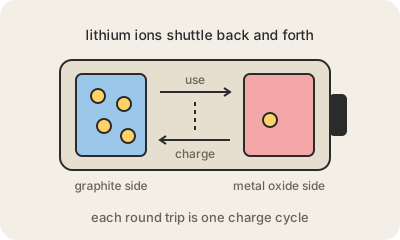
A lithium-ion battery stores energy by moving lithium ions between two sides, called electrodes. When you charge it, the charger pushes the ions to one side; when you use the device, they flow back and the battery releases that energy as electricity. The same trip can repeat hundreds or thousands of times, which is what makes it rechargeable.
It won because it packs a lot of energy into little weight and space, and it barely loses charge sitting in a drawer. That is why the same basic chemistry powers your phone, your laptop, wireless earbuds, power tools and electric cars. Its inventors received the Nobel Prize in Chemistry in 2019.
Every lithium-ion battery wears out. Each charge cycle, heat and long stretches at 100% or near 0% slowly reduce how much it can hold, so a phone that lasted a full day when new may need a charger by the afternoon after a few years. A small chip inside, the battery management system, watches temperature and voltage to keep it safe. A damaged or swollen battery can catch fire, which is why airlines ask you to carry them in the cabin.
Keep in mind
- Lithium ions move one way when charging and back when discharging.
- Lots of energy for its weight, which is why it is everywhere.
- Capacity drops over time; heat and extreme charge levels speed that up.
- A swollen or damaged battery is a fire risk and should be replaced.