Online scams
Tricks that use messages, sites and apps to get you to hand over money or data.
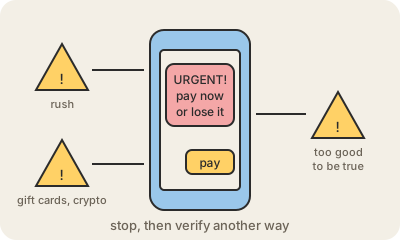
An online scam is a lie told through a screen with one goal: getting you to send money, share a code or install something. The tools change, from email and fake websites to WhatsApp, marketplaces, social media and dating apps, but the story is usually one of a handful: a relative in trouble who needs a transfer, a package held at customs that needs a small fee, an investment or crypto opportunity with guaranteed returns, a job that pays for liking videos, a seller with an unbeatable price, or a romance that eventually needs money.
Phishing is one family, aimed at stealing passwords. Many scams skip that step and simply convince you to pay. They lean on the same levers as all social engineering: urgency, fear, greed, affection and authority. Generative AI has made them more convincing, with flawless text in any language, fake profiles with realistic photos and even deepfake voices of someone you know.
Almost every scam has at least one tell: pressure to act right now, a request for secrecy, payment by gift card, crypto or a transfer to a personal account, or an offer far better than normal. The defense is to slow down and verify through a channel you already trust: call the relative on their usual number, type the bank's address yourself, never share verification codes. If you were scammed, contact your bank right away and report it; speed matters for getting money back.
Keep in mind
- Scams aim for money or codes; phishing is the branch that steals passwords.
- Red flags: urgency, secrecy, unusual payment methods, too-good offers.
- Verify through a channel you already trust before paying anything.
- If it happens, call your bank immediately and report it.